Tuesday, June 13, 2006


I've been hearing a lot on the new book "The Bridges of Pittsburgh." Apparently we do have more bridges than any other city in the world. The author, Bob Regan, previously published a book on the stairways of Pittsburgh. Yes, these are great assets and likely fine books. But the state of our bridges and stairways are not such that we can take full advantage of those assets.

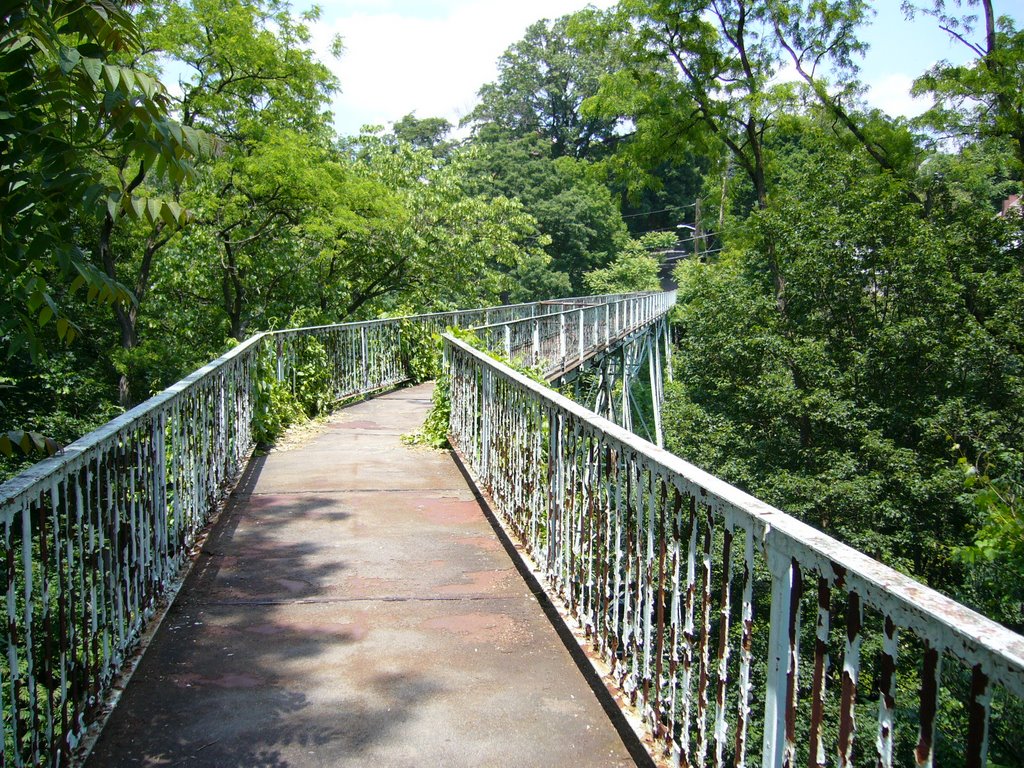
While wondering around Brighton Heights one day, I discovered a walking bridge off Termon Avenue. Today I had a few minutes to kill so I walked the bridge. I had thought it was closed to pedestrian traffic since it was blocked by a baricade, but on closer inspection I noticed you could go around the baricade which was likely placed to keep bicycles or other small vehicles from traveling on the bridge.

Like San Francisco and other great cities, Pittsburgh is connected by an intricate system of pedestrian walkways. In fact, many homes are not accessible by automobile, and as this bridge in Brighton Heights illustrates, many connections are not possible by auto.

My walk today revealed that this pedestrian system is in danger of not surviving but a few more years. Yet, like the Street Cars in San Francisco, Grand Central Terminal, once obsolete these bridges can be a major component in an exciting future.

Saturday, May 27, 2006

I've heard more rumors that a coffee shop could soon ad to the retail scene on East Ohio Street. A coffee shop is a step towards enhancing the viability of the housing in Deutschtown and other residential neighborhoods.

It may seem like "just a coffee shop," but such steps may be as important or more important than larger developments.

Take in point the new entertainment complex planned for the North Shore. Entertainment is not exactly what we need to boost the viability of housing. More than entertainment, urban housing needs grocery stores and drug stores and coffee shops.

Recently Trader Joe’s announced it's moving into East Liberty. It doesn’t immediately benefit North neighborhoods, but the success of these stores could send companies like these looking for other city locations. I expect our best hope is that with continued downtown residential development, we’ll see retailers like Trader Joe’s and Walgreens looking at spaces—many which already exist on the North Shore and maybe even North Side.

Still, we (North Side) really need to resell parts (Deutschtown, Mexican War Streets and North Shore) of the North Side as "DOWNTOWN" living. These neighborhoods are the remainder of downtown Allegheny, which ajoined downtown Pittsburgh until it was annexed. They should, more than a century later, be officially united with the rest of downtown Pittsburgh.

Monday, May 15, 2006

Fortune magazine and CNN recently published a list of seven real estate dead zones, five danger zones and several safe zones. The seven dead zones are some of the biggest markets that have seen the most market heat in recent times. They include Boston, Las Vegas, Miami, Washington, DC, Phoenix, Sacramento and San Diego.

The danger zones include Chicago, Los Angeles, New York, San Francisco and Seattle.

What’s safe? Cleveland, Columbus, Dallas, Houston, Kansas City, Omaha and Pittsburgh.

What makes a market safe, dangerous or dead? Compare Pittsburgh with San Francisco and Boston. In Pittsburgh the average home price is listed at $155.3K and the fair market value is listed as $182.1K, fifteen percent undervalued. CNN gives San Francisco and Boston an overpriced rating with the average price exceeding the fair market value as much as 53 percent.

Fortune says right now the ratio of home values to incomes in the bubble zones is about 40 percent above its historical average.

The analysis says homeowners who can stay put have little to worry about. Those who bought high and have to move may have difficulty. In a separate article, the magazine tells real estate investors who have hoped to hold and flip to get out.

Of course things are different in the safe cities like Dallas, Cleveland, Omaha and Pittsburgh. The bubble never took prices into the stratosphere and homes are affordable to a far larger percentage of the population.

Will that send investors and homeowners to Pittsburgh? As far as investors are concerned, that might depend how well alternate investments like cds and stocks are performing. Where home values increase at five percent or so, a cd paying five percent is easier money. Rentals can have much higher return, but not without effort.

As for potential homeowners, I suspect the outflow from major cities may subside as prices fall, but it’s unlikely prices can fall enough to make high-priced cities much more affordable. Cities with affordable housing should continue to have some lure. Those who already own homes in high-priced markets can’t easily move without incurring losses, instead they are dependent on looking for salary increases to make up the difference.

Tuesday, May 09, 2006


You've probably heard by now that Pittsburgh was ranked among the top ten "smart" cities--meaning you can afford a pretty good life here without breaking the bank. I guess that's kind of like buying a loaded Buick instead of a Lexxus. Anyway, I was never one for fancy cars.

If you've ever thought life was too expensive where you live, you might have looked to other cities. Many people have considered quitting their jobs, retiring early, selling their condos and just high-tailing it out of San Francisco, LA or New York.

Pittsburgh, Nashville, Minneapolis and the other seven cities would seem to be smart choices; the folks who move here undoubtedly will find a good quality of life at an affordable price.

These affordable cities aren't the only place people are moving to, however. While on one hand condos are filling America's downtowns, the far exurbs are filling with new housing. Unlike the affordable cities, moving to the exurbs is not a smart choice.

Despite the lure of affordablility, most cities are losing people. In fact, the census says nearly every large metropolitan area had more people move out than move in from 2000 to 2004.

Likewise the New York Times recently anylized IRS data and found that with the single exception of Las Vegas, no city proper makes the list of substantial population gainers; "American taxpayers by and large are outward bound. But this isn't uniformly a migration to exurbs, or to traditional Sunbelt or Western destinations like Florida or Arizona.

The trails often lead north, to the lakes of Minnesota and Wisconsin; to the foothills of northern Georgia; to the forests of northern California; to the fields of northern Michigan. Cass County, Minn., 120 miles from Minneapolis, is on the list, as is Shasta County, Calif., 180 miles from San Francisco," the paper revealed.

The cost of gas not withstanding, none of these places folks are moving to made the list of "smart" choices. Live in an expensive city? Thinking about relocating? Pick up a copy of Kiplinger's Personal Finance and choose a smart city before you go.

Tuesday, May 02, 2006

Millcraft industries suggested recently that bus traffic be routed off of Fifth Avenue downtown. According to a Post-Gazette article, the company believes smog from the buses, loitering in front of buildings, and traffic congestion could hinder its plans for residential and retail development on Fifth.

As someone who wakes to the sound of "12A-Downtown" I can relate to the concerns. Diesel buses in Pittsburgh are also far less tolerable than the electric buses and streetcars in San Francisco. Replacing buses with more living-friendly forms of public transportation would be a great goal. However, the desire to eliminate the "clutter" of the street is as old and damaging as ever.

The desire to bring residents to enjoy urban downtown is welcomed, but the desire to make downtown into a suburb is misguided and harmful. Also mentioned in the article is a desire to eliminate "loitering." I guess that means waiting for buses.

Let's refer here to Jane Jacobs. Just when I thought she'd won, we need her more than ever.

"Under the seeming disorder of the old city, wherever the old city is working successfully, is a marvelous order for maintaining the freedom of the city. It is a complex order. Its essence is the intricacy of sidewalk use, bringing with it a constant succession of eyes. This order is all composed of movement and change, and although it is life, not art, we may fancifully call it the art form of the city and liken it to a dance -- not to a simple-minded precision dance with everyone kicking up at the same time, twirling in unison and bowing off en masse, but to an intricate ballet in which the individual dancers and ensembles all have distinctive parts which miraculously reinforce each other and compose an orderly whole."

Saturday, April 22, 2006


A recent headline caught more than a few urban advocates off guard. “American’s Fleeing Big Cities.” According to a new census report nearly every large metropolitan area had more people move out than move in from 2000 to 2004.

Working in real estate leads to a natural interest in trends such as these. It’s hard to tell whether Pittsburgh can be included in this category. The first question is whether Pittsburgh is a big city to be fleeing from or a small town to be fleeing to.

Folks have been leaving Pittsburgh (along with Cleveland, Buffalo, Youngstown) for decades now, and while there is incidental evidence that people are now coming in, census data hasn’t yet showed that (while the losses continue to lessen).

The reason given for fleeing the biggest cities, high cost, certainly aren’t present here. That at least leaves the door open for Pittsburgh to be a place to flee to, if she plays her cards right.

The conundrum is that traditionally it has been places that people are fleeing to that experience the high real estate prices. Today it’s the places being emptied. About 60,000 people left San Francisco between 2000 and 2004, Chicago experienced similar numbers. New York City lost some 210,000. Los Angeles had losses topping 110,000.

Richard Florida, (fomer Pittsburgher and) a professor of public policy at George Mason University told USA Today that smaller, wealthier households are replacing larger families in many big metropolitan areas.

“That drives up housing prices even as the population shrinks, chasing away even more members of the middle class.”

That may be, but the question of how long can prices continue to rise when people are leaving needs to be asked. In most cities, smaller, wealthier households moving in marks a paradigm shift and poses new questions for economists. It also poses questions for the direction of the markets in places where former urbanites are moving to. It isn’t the working poor as much as the young and upwardly mobile who are choosing to relocate outside major metropolitan areas.

On the subject of trends, there are two other issues that are sure to come into play. The first is the high cost of fuel. What is that expected to do to housing markets? My inclination is it will favor cities or transit communities. Yet the fuel costs probably aren’t going to increase enough to warrant the price of urban Boston. The combination may just make life harder without having a net impact favoring suburban or urban geography.

The second is global warming. We know it’s happening whether or not it’s caused by humans. This may not in itself favor urban or suburban locations, but is sure to favor regions. Where? Thoughts?

Wednesday, April 12, 2006

DiBruno, DeLallo, whatever. It's a great choice for a market in downtown Pittsburgh. DeLallo Bros. has been chosen as the market that will be located in the former Lazarus department store in downtown Pittsburgh. Initially the possible outlets mentioned were Giant Eagle and Whole Foods, but in the end it was the local chain that won out. DeLallo is based in Jeanette. I had previously visited one of their stores near Greensburg. It reminded me of DiBruno Bros., a store that started in the Italian Market District in Philadelphia. I previously suggested something similar would be a good match for downtown Pittsburgh (DiBruno has a location on Chestnut Street in Philly--an area with many hotels and retail stores). From my small sample, DeLallo has great products and I feel the store is the perfect match for downtown Pittsburgh. It's sure to please downtown residents, office workers and vistors.

Visit DiBruno
Visit DeLallo

Saturday, April 08, 2006

With a lot of out-of-towners looking for homes in Pittsburgh, I get a lot of questions asking just what a particular neighborhood is like. You can only tell so much from a map and a photo of a house.

There's really no substitute for going there, however, but a picture is still worth more than a map and photo. I've begun a site at pbase that will allow me to upload photos of our neighborhoods on an ongoing basis.

In anticipation of my persistence, the site contains a small fraction of what will eventually be there, but it's enough to help begin to provide some snapshots of Pittsburgh's great neighborhoods Link

Wednesday, April 05, 2006

PMI Mortgage recently listed Pittsburgh as one of the nation's least risky housing markets along with San Antonio, Cincinnati, Indianapolis and Memphis. This echoes earlier reports inluding Smart Money magazine which called out city "undervalued."

These are the exceptions. PMI says forty-eight of the nation's 50 largest metropolitan statistical areas (MSAs) face a greater risk of declining home prices this quarter, adding the continued strength of the national and local economies suggests that in the absence of an economic shock, the once red-hot housing market will cool gradually. Appreciation has slowed in nearly half of the MSAs as compared to last quarter. Affordability remains a problem with eight MSAs registering affordability levels considered low by historical standards, due to appreciation and higher interest rates.

U.S. Market Risk Index scores increased for all of the top 50 MSAs except Chicago, IL, whose score decreased one point (New Orleans was not scored this quarter due to the catastrophic impact of Hurricane Katrina). Fourteen of the top 50 MSAs now have risk scores above 500, meaning they face a 50 percent or greater risk of home price declines in the next two years, up from 11 MSAs last quarter. The average score has increased from 261 last quarter to 287. The biggest change was in Minneapolis, MN, which gained 90 points, taking it to a score of 350 and up two spots in the ranking to No. 19.

Other U.S. Market Risk Index trends include:

-- In addition to Minneapolis, MN, MSAs that saw significant increases in risk were Virginia Beach, VA (+65 points to 274), Baltimore, MD (+62 to 279), Newark, NJ, (+61 to 427), New York, NY (+58 to 506), and Washington, D.C., (+56 to 401).

-- Riverside and Oakland, CA traded places, making Riverside No. 5 and Oakland No. 7. San Francisco and San Jose, CA also traded places, making San Francisco No. 10 and San Jose No. 11. Other than that, the top 15 are the same as last quarter with risk still clearly focused on the coasts.

-- There are now eight areas with Affordability Index scores below the vulnerability threshold of 70: San Diego, Santa Ana, Riverside, Sacramento, Oakland, and Los Angeles, CA, and Fort Lauderdale and Miami, FL. Long Island (Nassau-Suffolk), NY, San Jose, CA, and Tampa, FL are also considered potentially vulnerable with scores between 70 and 75.

-- While slowing, appreciation remains high by historical standards. Phoenix, AZ, Orlando, Fort Lauderdale, Miami, and Tampa, FL, Washington, D.C., Virginia Beach, VA, and Los Angeles, CA saw year-over-year appreciation of more than 20 percent.

The PMI report coincided with numbers from the National Association of Realtors showing second-home buyers now made up 40 percent of the market. The bulk (27.7 percent) of these are purchased for investment purposes.

The San Francisco Chronicle noted however that while risk for that city's homebuyers may be increasing, in the past 20 years the return for any five-year period ranged from a gain of nearly 50 percent to a loss of about 10 percent, with a median gain of 33 percent. Those who owned their homes for 15 years or more almost never incurred losses.

Saturday, April 01, 2006

Eric,

Don't you think that building all these "luxury" condos is a bit of a mistake, though? I was talking to the guys at Burt Hill, an arch firm that is in Pittsburgh (they were at some career fair thing here), and they were talking about how they're rallying to meet with the mayor and the planning dept etc to try to make a move to get these units to be more affordable. I mean, as a native I know where the cheap and cool neighborhoods in the city are, and would know exactly where to move to if I were to move back, but most of my fellow friends wouldn't, and the first thing they would ask is about downtown because it's in the center and close to everything. So shouldn't there be some kind of housing that those of us who are low on the totem pole salary wise should be able to afford? This is a problem Philadelphia is experiencing, too, and if I come back to Pittsburgh and find it's been condo-fied the way Philly has I'm going to be angry. One of the great things about Pittsburgh is that it hasn't jumped on that bandwagon, until now. But at least they're building housing downtown finally. Ack, prisoner's dilemma.

Amanda

Amanda-

The way I see it there wasn't any housing downtown before the luxury condo's came. Housing in general downtown will bring retail and make downtown better. That will make living in the areas around downtown without a car more practical and attractive. So, while a mix may be better, the condos themselves are good in my opinion.

In the short-term, however, a lot of people think all these new rental units are hurting the small landlords. That's likely temporary too. It could play out that the rental units are sold to homeowners who want to live near downtown. That would be good for the neighborhoods.

The downside? Well, in the last 50 years lower income people had to travel to the suburbs for jobs. In the future they may have to travel to the city. However, because the entire thing can't be developed at once, there will always be more of an economic mix and wide price range in the city.

An energetic, expensive city is better than an empty, cheap one. Is there a balance? I hope.

Eric

This exchange took place at the East Allegheny Yahoo Group

Friday, March 31, 2006


There's a lot of debate in the neighborhood recently about whether or not the market in West Deutschtown will support $200K and above houses. I have also had my doubts, but again and again those doubts are erased by new sales. Five eleven Tripoli Street is a new example. I recently noticed that a sale is in progress. I don't know the details, but the home was listed at $199,900. Likewise 1010 Cedar, a large home that needs renovated, is graced with a sold sign. The listing price was $149,900.

Market examples of homes that sold for more than $200,000 include five sixteen Lockhart which sold for $210,000. Four seventeen Lockhart sold for $254,500 this year as well.

But those are renovations of Victorian homes South of East Ohio Street, an area that is perceived as having fewer rough edges.

The two contingencies I first mentioned are North of East Ohio, and one isn't even renovated. And we still ahve the example of new construction sales north of East Ohio. One thousand two Middle Street sold for $188,000 in 2003. Add five percent a year for inflation and that's more than $205,000 in today's dollars.

There remain the matter of three unsold homes renovated by the East Allegheny Community Council that are also North of East Ohio. A look back shows this neighborhood has frequently been ahead of the market, and while some homes stay on the market for long periods of time, they do eventually sell.

Perhaps I am just in an optimistic mood today, but looking back, I'd guess new homes developed today and listed at $200,000 or more are closer to market reality than $150,000 homes listed in 2002.

Friday, March 24, 2006


Existing home sales are up, new home sales are down, condo sales are back up... it's credited to the weather, but wouldn't a warm January put all sales up? Perhaps it's showing the market favorability of existing homes in more central locations where there isn't much new construction. That would help explain why condo sales are also up.

The Commerce Department reported that sales of new single-family homes dropped by 10.5 percent in February. Previously on the downslide, sales of condominiums and co-ops were up again, this time by 8.8 percent in February and sales of existing single-family homes were up 4.7 percent.

I have an inclination that what we could be seeing here is a failure of development to keep up with an increasing demand for housing that's smaller, more efficient, low maintenance and centrally located near transportation and amenities.

I'll be on the lookout for supporting evidence.

Wednesday, March 22, 2006


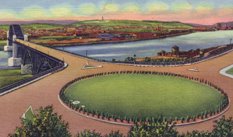
I read in Pop City this morning that Brighton Heights is planning to construct a grand entrance to the neighborhood, which includes a traffic circle. Brighton Heights went up on my scale of a livable neighborhoods earlier this year when I discovered The Vault, a coffee shop, had opened on California Avenue.

When I read the article this morning, I had the idea that a traffic circle which once existed next to the McKees Rocks Bridge was being recreated. It turns out that's not the case (the new circle will be a block or so away,) but still recalls an earlier desire to make things look good. Yes, there was a time when function followed form!

I don't mean to bring into question the function of traffic circles. They are of course aethstetically pleasing. They're also functional once the locals learn how to use them.

In any case, creating an entry way for Brighton Heights is a welcome idea.

If you haven't discovered it, it's worth a look. I was there on Monday visiting a client who was busy restoring a very large home. What a task! I would think the results will be quite satisfying.

There are also some condo's available in buildings designed by a noted architect (Osterling) just steps from the coffee shop.

If you don't know where Brighton Heights is, soon it will be easier to find. If you'd like to check out some properties there, give me a call at 412-322-2000.

Sunday, March 12, 2006

I just heard about another artist who had moved to Pittsburgh. This one is a costume designer from Germany. Earlier this month I had taken picture-frame restoration classes from a French guilder, also now a Pittsburgher (he says his wife liked it here). Later today I'll meet up again with a San Franciscan who works in the opera there. She hasn't taken the plunge of becoming a full-time Pittsburgher, but she has purchased a home here.

I often hear Pittsburghers downplay the qualities of the city they both love and love to make fun of. I used to hear the question "why?" from Pittsburghers who had found out I had moved here after six years in San Francisco (I had lived in Pittsburgh previously). Today fewer are asking that questions, and even less are laughing.

The Pittsburgh landscape has inspired artists for generations. Andy Warhol might have left, but before him there was George Hetzel, Mary Cassatt and others. Today Pittsburgh's art scene is thriiving from Penn Avenue in Garfield to Penn Avenue downtown, Sampsonia Way, Regent Square and throughout the city. I know there's a significant cluster of artists on Spring Hill.

There perhaps two are two reasons they are coming. The first is the obvious beauty of the city and landscape (obvious to everyone but natives!) The second is the affordability and attractiveness of the city's building stock. There's a lot of great space in this place.

Sunday, February 26, 2006


Something very simple happened today. In any other urban neighborhood, coffee shops come and go. Here in Pittsburgh's North City Flats, a coffee shop was a long time coming.

Over the years I've heard stories about neighbors coming out to oppose coffee shops because they would attract people and bring about "loitering." These city suburbanites lost out. From today on there will be more to our neighborhoods than just decorative doors with homeowners hiding beside alarm systems.

Yesterday was the first day of operation for Beleza. This coffee shop is opening at a time when many "coasters" are looking for new cities to live in. Pittsburgh is high on the list (New York magazine recently named Pittsburgh as one of the top places New Yorkers are moving to. Many city neighborhoods are overlooked and one primary reason is because we can't always answer positively questions about whether there are grocery stores and coffee shops nearby.

From today foreward I can say "there's a great coffee shop over on Buenta Vista!"

Beleza opened at 8 yesterday morning. I arrived at 11:30. A young women was sitting out front with her dog. Three people stood on the opposite corner taking photos. Inside I was greeted with warm colors and aromas. A few sat in their solitary corners, but for many others it was like walking into a friendly living room. I had the sense that all these coffee-starved folk knew of each other, had exchanged friendly glances, but had few opportunities to interact.

"Where do you live?" the person at the counter asked. Hell, I thought, that may be a rather rude question in Starbuck's, but here it seemed normal, even welcomed. "Over by the Schoolhouse," I said. She lived up the block on Buena Vista.

Sometimes it seems day by day each of our little pockets we call "neighborhoods" are entrenched in their own provincial corners. We're stuck on Deutschtown being somehow distinct, if not better than the Mexican War Streets or Allegheny West. Today those lines were not the only ones to blur. Today those lines that kept us seperated by the sense of personal space on a city street were blurred by this third-place where we can meet and interact from today on as neighbors.

A side note, Beleza serves Peace Coffee.

Saturday, February 25, 2006

With or without gambling, it may be possible for much good to come from Casino dreaming. It would seem a shame for all the plans to go to waste for lack of a casino license. Faced with the prospect of not getting a license, the dreamers seem to be asking: "do we really need a casino to make this work?"

It's a good question to ask, and more often the answer seems to be "no."

Word is Forest City may develop South Shore condos with or without the Casino license. Likewise, after pulling his bid for a North Shore Casino near PNC Park, Merrill Stabile wants to develop anyway.

According to the Post-Gazette (which undoubtably must find some joy in the new parking garage rising in front of the Tribune-Review sign), Stabile and Kratsa Properties are putting together plans for a proposed residential, retail, entertainment and hotel development at the site.

In other recent developments, the developer of the DelMonte and Equitable office buildings, Continental recently announced the addition of three restaurants in time for the All-Star game in July.

More often than not, what developers and planners are coming up with are dense mixed-use developments with casino's in them. These kinds of developments, sometimes known as cities have existed for centuries. We are perhaps now realizing they will work with or without casinos.

Wednesday, February 22, 2006

Just before heading out to spend an afternoon showing a New Yorker houses in Pittsburgh, I received a note from Virginia, a frequent poster to a yahoo group and a potential Pittsburgher currently living in New Jersey.

Virginia described the current New York Magazine and an article called "A Moveable Fiesta", about Buenos Aires becoming an "expat Haven", and she quotes: "New Yorkers are also Fleeing to:", the places listed were: "Shanghai, Budapest, and Pittsburgh"

Virginia just happened on the article and hey, I'm a subscriber and I didn't notice that. "I thought, (oh, God, no, not before I take a look around) Dammit, why do New Yorkers have to "discover" everything, everywhere. That's exactly what happened in Philly?" Virginia asked aloud in the email.

The magazine notes that $300,000 gets you a three-bedroom home in Pittsburgh. Hell, I think $30,000 would.

Tuesday, February 07, 2006

I can see the change in myself since I moved back to Pittsburgh from San Francisco. Where once I would run out the door any time of day to make a dash for Walgreen's or the organic food store around the corner, now I hop in the Beetle and head for the suburbs. In my case the reason may not be so much the built environment as a lack of retail options around me.

In any case, even life in East Allegheny is far removed from that in many a suburb. There are many occasions now where I do walk that would be lost should I move to say Cranberry. As it turns out, such a move would be bad for my health.

Researchers have shown for the first time that the same pattern of unwise land use can adversely affect a wide range of health indicators, including obesity and air pollution. This comprehensive study is the first to be commissioned by a local government to assess multiple health impacts of the built environment. The study's findings were reported in the winter edition of the Journal of the American Planning Association (JAPA), the scholarly journal of the American Planning Association.

The study examined the impacts the built environment could have on residents' health if it reduces opportunities for active transportation (walking or biking) and encourages more time spent in vehicles that can lead to an increase in vehicle emissions and air pollution. The authors explained that such a built environment could lead to an increased risk for several major chronic diseases, obesity, exposure to pollutants and risk of respiratory ailments.

"Our findings are consistent with literature suggesting that current laws and regulations are producing negative health outcomes," said Lawrence Frank, J. Armand Bombardier Chair in Sustainable Transportation in the school of Community and Regional Planning at the University of British Columbia.

The findings were generated from two studies conducted in King County, Washington. Use of the same walkability index in each study in the same region allowed for a strong comparison of association across multiple outcomes.

The first study conducted was the Neighborhood Quality of Life Study. It concentrated on the relationship of urban form to physical activity and obesity. The results from this study were consistent with findings of previous studies.

"Walkability of neighborhoods around each participant's home was significantly related to overall physical activity levels, minutes per week devoted to active transportation, and BMI," said Frank. "People living in high-walkable neighborhoods were more physically active, walked more and had lower BMI."

The second study was the King County Land Use, Transportation, Air Quality, and Health Study that assessed the effects of land use and transportation network design on travel patterns and per capita vehicle emissions, which influences air quality.

The authors found that a modest 5 percent increase in neighborhood walkability was associated with 32.1 percent more minutes per week of physically active travel, approximately a one-quarter point lower BMI (about 1.5 pounds), 6.5 percent fewer vehicle miles traveled per capita and lower vehicle emissions (5.6 fewer grams of oxides of nitrogen (NOx) and 5.5 percent fewer grams of volatile organic compounds (VOC) per capita). These compounds react in sunlight to form harmful ozone.

"These findings have begun to untangle highly complex relationships and produce some astonishing and yet practical answers for promoting healthier people," said King County Executive Ron Sims. "The studies bring clarity to the gains that can be realized by bringing all the different disciplines together, working toward a common goal. King County and its partners are already putting these findings to work in land use management and transportation policy that will have lasting rewards for our communities and the people who live in them."
Bob O’Connor has been pretty lucky. Downtown development has gained serious momentum, and now the Steeler’s victory threw the city into the national spotlight. Today’s victory rally, however has brought to light the mistakes of the past and, through poor planning has thrust the troubles of our downtown (namely the Fifth-Forbes corridor) into the national spotlight.

Instead of choosing a route that would lead the Steelers through a revitalized areas that could really show off the city, the organizers lead the thousand of fans and countless tv cameras along Fifth Avenue, past real estate signs and vacant, boarded storefronts. Today we saw the best of the city and the worst of downtown.

Why couldn’t the route have gone from the Civic Area past Mellon Park, to Fort Duquesne Boulevard or perhaps Penn Avenue? Unfortunately today’s parade likely served to reinforce an incomplete and negative image of downtown Pittsburgh to television viewers. If I were watching from another city the downtown I saw today probably couldn’t be distinguished from one in the late 70s. In fact, there are even seeminly fewer stores today.

On the good side, the thousands (I’ve heard numbers as high as 200,000) folks who went downtown for the day undoubtedly saw real changes in downtown Pittsburgh for the first time. Unfortunately television viewers couldn’t get that sense. To them it’s the same old steel town, and when the crowd goes home to Cranberry, the same old forlorn downtown Pittsburgh.

MORE

Wednesday, February 01, 2006

The East Allegheny Community Council is looking for people interested in restoring an old house. There are currently four houses in the Deutschtown National Historic District (one is on the local) available for restoration. It would also be great if those wanting to restore the homes planned to live in them. More information on the homes is available at historicproperties.com or at the Deutschtown web site