


Before I moved back to Pittsburgh from San Fran, I traveled back and forth. There were two solid houses with panoramic views on Dunloe Street that were somehwhat deteriorated. The council was looking for someone to rehab them. I told some friends in CA about them and one or more came in to see them. No one bought them in the end and they were demolished. One friend tried to buy a house from the city but was told he was not eligible because he never paid taxes to the city. Go figure. I am telling this because more houses are demolished from neglect than are saved by young people with energy. A $120,000 house that one can move into will spend less time on the market than a $5K house that needs everything. I'd venture the same is true for a $50,000 house that needs some things.
Luckily we have a market and many people have spent a good portion of their lives fixing up houses in the War Streets and elsewhere. It has been a labor of love--love of old houses, love of community, and well many just can't stand to see the city they grew up in (or moved to) deteriorating. Today we're pretty far along and what some would call "gentrification" is part of a national trend in American cities to see the core come alive again. Gentrification or not this is a good trend in the sense that every urban house represents one less being built on a former Cranberry farm. City living is good for the environment and good for humanity because people of diverse backgrounds --and incomes--actually meet each other on the street. Many are out there working hard to imporve access to quality affordable housing as this trend progresses.
Of course the more people who want to live in great city neighborhoods like Central Northside, the more expensive houses there will become. The $5K house market is especially limited--there is absolutely no way to increase the supply!!! As I mentioned before, few people with jobs want to rehab a house. Some do it for a living and they make money from it--good. Otherwise some of these homes would end up being razed--and guess what, every house that's razed reduces the supply and pushes prices further upward.
Luckily we live in Pittsburgh where people have been leaving for 50 years. While the supply of homes for rehab, or just inexpensive homes may be dwindling on the flats, there are plenty on the Hills, as well as Sharpsburg, Wilkinsburg, Millvale, etc (and even Marshall-Shadeland which is still relatively flat and close).
Monday, November 20, 2006


Sunday, November 05, 2006
There's an old house, actually a pair of them, that sit along Rt 28 near the Heinz Factory. They are likely some of the oldest homes in Pittsburgh. I currently have some friends and community stakeholders engaged in discussions about saving them. If you'd like to be kept up to date or know anything about these homes, please join the discussion group on yahoo groups. Just go to this link and click on JOIN.
I also recently wrote an article about pre-industrial buildings in Pittsburgh. It's posted at legnth at The New Colonist. Check it out.
Monday, October 02, 2006
The topic of this post is gentrification. A reader had sent an email to the TNC (The New Colonist) Pittsburgh email group asserting that I was a proponent of gentrification. That's been a hot button topic in urban situations for some time. It's also a hard one to get a handle on.
First, you can't stop a neighborhood from changing. It either gets better or falls apart.
We'd all like neighborhoods to be cheap and cool forever, but that's not reality anywhere. (Name one that has been cheap and cool for more than a decade or so!) Urban neighborhoods stay cheap and cool for a while until the houses start falling down or the crime rises beyond the tolerable level for most people. Or in the other direction, it becomes unaffordable, or at least living in a big space becomes unaffordable so we'd have to change our lifestyle to live there. Sometimes people move into an urban area in the second half of a "gentrification" process and then scream that they don't want gentrification, which really means "more gentrification," ie "post me" gentrification.
Originally the focus of preservation, the Mexican War Streets neighborhood for instance has been in a slow general upswing since the 1970s. Like other North City neighborhoods it would seem now (and now is not the first time) the neighborhood could become really popular really fast.
This is not only the result of people coming in and gentrifying the place. It's a result of changing demographics, high gas prices, longer working hours and other factors that are making urban neighborhoods more attractive. Since the movement started with preservation, preservation is also to "blame" for gentrification. Preservation costs money and so naturally, barring subsidies, leads to some degree of gentrification. If that process had not begun in the 1970s, it's likely much of the War Streets would have been demolished as the buildings would have deteriorated to a point of being unsafe.
This process is not exclusive to urban neighborhoods either. Many suburbs today are faced with "monster houses" being built where small post-war homes used to stand.
Urban areas are unique in their potential to preserve diversity and bring together people from a variety of backgrounds, economic levels and interests. In fact, many urban neighborhoods consist of primarily wealthy minorities and working class whites. Even if an area reaches the highest level of "gentrification" (think Shadyside), there are still a mix of races and incomes because there are apartments of all sizes, condos and small houses (sometimes alley houses) mixed in with the larger townhomes. (so if you've recently moved into an urban area and want gentrification to stop, make sure you work to save the small alley houses rather than make parking places. Developing apartments and condos in addition to single-family homes can also help.
This issue came up back in the late '90s when I started "the New Colonist" with Rick Risemberg. "New Colonist" represents a return to urbanism from suburban-style
living. City living is good because:
1. It's healthier (walking)
2. Economic integration is good
3. It's easier on the planet
4. It has a unique ability to foster diverse, virbrant neighborhoods.
Friday, September 01, 2006
Bob O'Connor did a lot for Pittsburgh during his short service as mayor. We saw in him a man who believed in Pittsburgh. He gave us the confidence to believe in it again too. He loved Pittsburgh. We saw that and so remembered Pittsburgh as a city worthy of love. To those who would dare ask "why Pittsburgh?" O'Connor might ask "why not sooner?"
It might seem today that Mayor O'Connor was an unucky man. To borrow from "Meet me in Saint Louis," it would seem to be an early stroke of luck to be born in his favorite city. More than that, Bob O'Connor wanted to be mayor of his favorite city and became mayor of that city. During those few short months it was a city at its best. The Steelers won and Pittsburgh cheered. Bob O'Connor cheered with us.
It was just before the world came to watch the All-Star game when the city looked its best that the dark cloud started to form. It's hard to believe such a bright star could fade so fast. But here we are. It's hard to see much light today, but in coming days I hope we can go forward with the energy and optimism of our great mayor who didn't so much energize us as show us the good in our selves.
Sunday, August 20, 2006

When homebuyers come to Pittsburgh and search for a city home, they more often than not look to the areas with strong retail districts, primarily Squirrel Hill and Shadyside, and to a lesser degree South Side, then come to North City neighborhoods because of price. To get over our next hurdle to become a primary destination for homeowners, we have to have that strong retail in place.
If all of the businesses I have heard are coming actually open, we may be well on our way there. A new and rather large coffee shop is planned for the West Deutschtown section of East Allegheny. Nearby the former James Street may reopen as a Bistro. In the Mexican War Streets, home of the new and successful Beleza Coffee House, a cafe and book store are planned for Monterey Street. True, an upscale bar on Western Avenue recently re-opened as Nuance.
Even more out of the way neighborhoods like Charles Street Valley and Brighton Heights have seen the addition of coffee shops in recent years. On the shores, the Heinz Lofts Cafe and the Andy Warhol Cafe add lunch stops and a plethra of new restaurants are planned for the North Shore (it pains see to see that Soho bar in the new Marriot hotel, however. I expect a Caribou or Starbucks could open somewhere on the North Shore or in the new condo building on Fort Duquesne Boulevard).
Talk is also filling message boards about a potential food co-op coming to one of the flats neighborhoods. The prime choice may be the War Streets, but potential commercial locations may send them to East Allegheny or Brighton Road.
Interestingly, most of the new retail developments are not coming to the three main retail districts in the North City, East Ohio Street, Federal/North and Western Avenue (If you count North Shore, that has quickly become the main business district in North City.
The North Avenue business district of course has been boarded up and locked up in court for more than a decade. The remaining part of the Federal Street district continues to survive and should be helped by new housing (planned but eternally delayed) for the area and a potential new library. Western Avenue struggles along (quite a few retail buildings are now for sale, so change could come fast) and East Ohio Street continues to change at a snails pace.
Perhaps the prime retail district, East Ohio Street has become the target of efforts by the Northside Leadership Conference. Some new businesses and renovations have come in recently, including Priory Pasteries, a Cricket store and a dollar store. The street also has a colection of long-time businesses to build on. Some buldings are for sale and others are held by speculators or remain in poor condition.
The new retail additions are a welcome event that could make great strides in terms of changing the attractiveness of North City as a great place to live. The real task will come later-- to continue construction of North City retail and bring it to the three main retail districts.
Tuesday, August 15, 2006
New Census data had some colorful light to shed on our demographic situation.
Pittsburgh is still losing people, that's the bad news, but...
"The city of Pittsburgh's share of new residents, about 4 percent, was in the middle of the pack of 198 U.S. cities, higher than New York, Los Angeles, Chicago -- and Cleveland, where new residents make up a paltry 1 percent of the city's population," reports the Trib.
Hello? We have more new residents as a percentage than New York and LA???? If it's accurate, it's big big news.
Also, the data shows Pittsburgh's small Hispanic population is growing--about 12 percent of Hispanics in the city last year lived outside of Pennsylvania the year before.
In other good news, the Post-Gazette says "Pittsburgh has cracked a national business publication's top 10 U.S. metropolitan areas as a potential site for companies looking to expand or relocate.
The bimonthly magazine Expansion Management ranked the region ninth among 362 metro areas in its fourth annual list of the best places to locate a company."
We now rank with such hot spots as Austin and Seattle!
Sunday, July 30, 2006
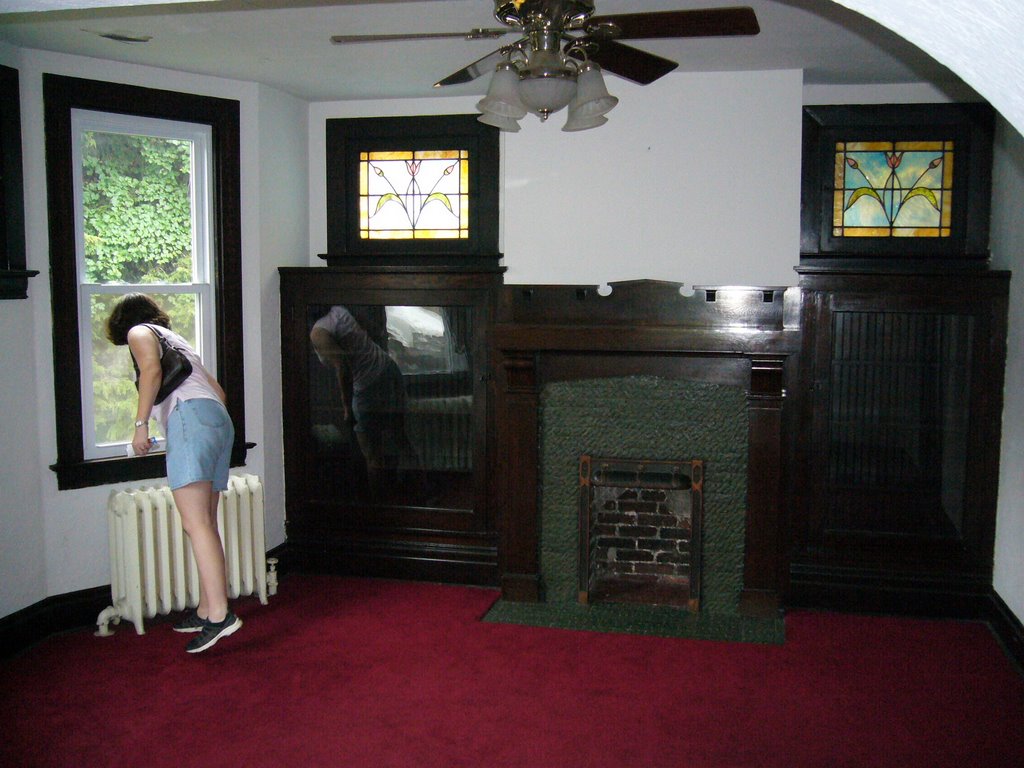
If you read any national newspaper you undoubtedly know the housing market is cooling off. If you live in Cranberry, your story is no different. However Western Pennsylvania in general and Allegheny County in particular are faring much better.
According to a recent Tribune-Review article, there has been a surge of about 40 percent in housing permits issued in Allegheny County, and a 27 percent decline in permits in Butler County, where Cranberry has seen its total slip to about 31 single-family units, from about 76 single-family units a year ago.
It wouldn't suprise me if a micro-look at other housing markets revealed similar trends. Gas prices are up, households are smaller and more and more of us are tired of the traffic and commuting. A video on ABCNews.com web site reveals the monster houses are falling hardest.
If you're afraid of the big bad bubble, look for reasonably sized urban homes.
Saturday, July 22, 2006
 Pre-industrial Pittsburgh is hard to imagine. In fact, it's almost as hard as getting the world to realize we're in post-indutsrial Pittsburgh. We still celebrate our industrial heritage. Smokestack's line the parking lot by the Homestead Waterfront. The U.S. Steel Building still dominates our skyline. Our Steelers, by winning the Superbowl, reminded the world "Pittsburgh" and "Steel" are forever linked.
There is a certain beauty to industry. The smoke, the fire, the molten liquid and the I-beams that now hold up the Empire State Building and the Golden Gate Bridge. Those are pieces of Pittsburgh and they can never be forgotten or removed from our memory.
Yet there is a pre-industrial Pittsburgh that remains to be rediscovered. Before railroads, there were canals, before canals there were trails. Before smoke filled the skies there was clean air and a natural beauty that brought artists here to capture.
We may not notice them, but there are remains and reminders of a pre-industrial era around us. One is a street on Spring Hill named "Hetzel." It's named for the family of "Scalp Level" landscape painter George Hetzel. Today Hetzel's work is well represented by the Westmoreland Museum of Art in Greensburg.
George Hetzel was born in France, but would leave his mark by painting Western Pennsylvania. He lived in Allegheny City and traveled to Johnstown to paint the landscape, long before Steel came to likewise define that city.
If you look closely you may find some buildings that existed in the pre-industrial days of Pittsburgh. Many are found in East Deutschtown, then a German community in the City of Allegheny. Although Hetzel claimed to be French, German was the family's native language (Another claim to Germany, he studied at the Dusseldorf Art Academy).
One such pre-industrial Pittsburgh building is the Block House at the Point. It's unlikely many noticed it in those days, however, and a miracle it survived. Many buildings built during Hetzel's life he may have actually visited also remain standing. Many of these are threatened by years of neglect.
This has been owned for years by PennDot with long-ago dismissed plans of building a 28-279 connector.

Today we're continually faced with the option of embracing our industrial past or rejecting it. Pittsburgh is emerging as a very different post-indutsrial city, yet the Pittsburgh of tomorrow may be able to embrace the natural beauty of our landscape as much as the steel might of our more recent past. So little of pre-industrial Pittsburgh remains to be preserved, however, and what is left isn't well prepared for the future. Even in the City of Allegheny, outside of a few homes on Spring Hill (which don't need preserving), there's little beyond East Deutschtown George Hetzel would recognize. We need to save East Deutschtown before only structures from the age of steel are left to define the history of our city.
Monday, July 17, 2006
My sister told me about an article over the weekend. It's one of the most exciting statements about Pittsburgh I've heard in a long time. The Clark Building (downtown) was recently sold for $22 million. The buyer isn't looking at conversions to housing as many have been looking at in downtown recently. No, the Clark building was bought with a look forward to new industry that could rival the age of steel and put Pittsburgh in a new category. Here's a quote from the Pittsburgh Business Times article:
"Gorman said he's bullish on Pittsburgh because of the high-tech companies coming out of Carnegie Mellon University.
'I believe that Pittsburgh is going to be the center for artificial intelligence and robotics. Within 10 years, that will be one of the biggest businesses in the world," Gorman said. "Pittsburgh will be to artificial intelligence what Silicon Valley is to chips.'" Link to article
In the past few months we seem to have really increased our momentum here in Pittsburgh.
Friday, July 07, 2006
 I think this is the first day of "All-Star" week and I'm not sure how good of a start we're having. This is a big day for Bob the Mayor and I'm sure it could've beenone of the highlights of his life to cut the ribbon opening the ceremonies, but instead, he's in the hospital. I also remember reading several new restaurants would be open on the North Shore in time for the week, but I suspect they're not going to make it.
Oh well, on July 4th I noticed the banners on the Roberto Clemente Bridge. They look great, and Pittsburgh has been looking better all the time. I don't imagine the mayor's cough or the fact that visitors can't go to a restaurant they didn't know existed will matter much.

I also had my first real visit to the new Schenley Plaza. I remember this was kind of pushed through by former Mayor Tom--with great results whatever your view on the politics. It's amazing how this wonderful plaza could have been a parking lot for so long.
Finally, I'd like to comment on my favorite topic, the Garden Theater block. For years I have been advocating selling off the buildings individually to private developers. For more than a decade the URA has been holding the buildings for development at the time the last is acquired. The last of course is the Garden Theater and it's still a hold-out. Well, at this time the largest of the buildings, the Masonic temple is advertised on the URA web site as available. This could be the beginning of something really good.
Wednesday, July 05, 2006

North City fared well in a recent magazine article about neighborhoods. Pittsburgh Magazine recently re-emphasized the affordability factor and noted that Pittsburghers want a bargain. Northside is one place homeseekers can find such a bargain. (The magazine defines that bargain as a home for less than $75,000).
What else to homebuyers want? An easy commute, a coffee shop and good shopping. No suprise here. My customers ask for the same things.
Brighton Heights won the most prominent spot among North City neighborhoods in the article with the median home price hitting that bargain barometer at $75,000. I also suspect it may not have made the magazines list if it wasn't for The Vault, a coffee shop on California Avenue.
I don't think it's the coffee shop itself that many homebuyers want, as the article infers, it's the "third-places" where people can connect with neighbors.
Brighton Heights also offers some shopping opportunities with a modern, full-scale pharmacy, butcher shop and other stores. North City neighborhoods may benefit in the future as both downtown shopping improves, and perhaps more importantly (and perhaps at the expense of downtown) Ross Park Mall solidifies its position as the regions premeir shopping mall.
Observatory Hill was mentioned in a sidebar labled "Seven Neighborhoods On The Rise." A lack of immediate shopping options or a coffee shop, I suspect kept it from making the main article. East Allegheny was also mentioned in the seven, although the median price listed of $33,000 is first unrealistic and second could actually scare away lookers. Those familiar with East Allegheny know the bargains are on the East side of the highway. Neighborhood group feuds (along with the highway) have in some minds created two neighborhoods (although with only 800 or so residents I can't imagine the benefits of an even smaller city neighborhood(s).)
What do we draw from this? Things are getting better and people are noticing. More, we know where we need to build, coffee and shopping. Read The Article
Tuesday, June 13, 2006
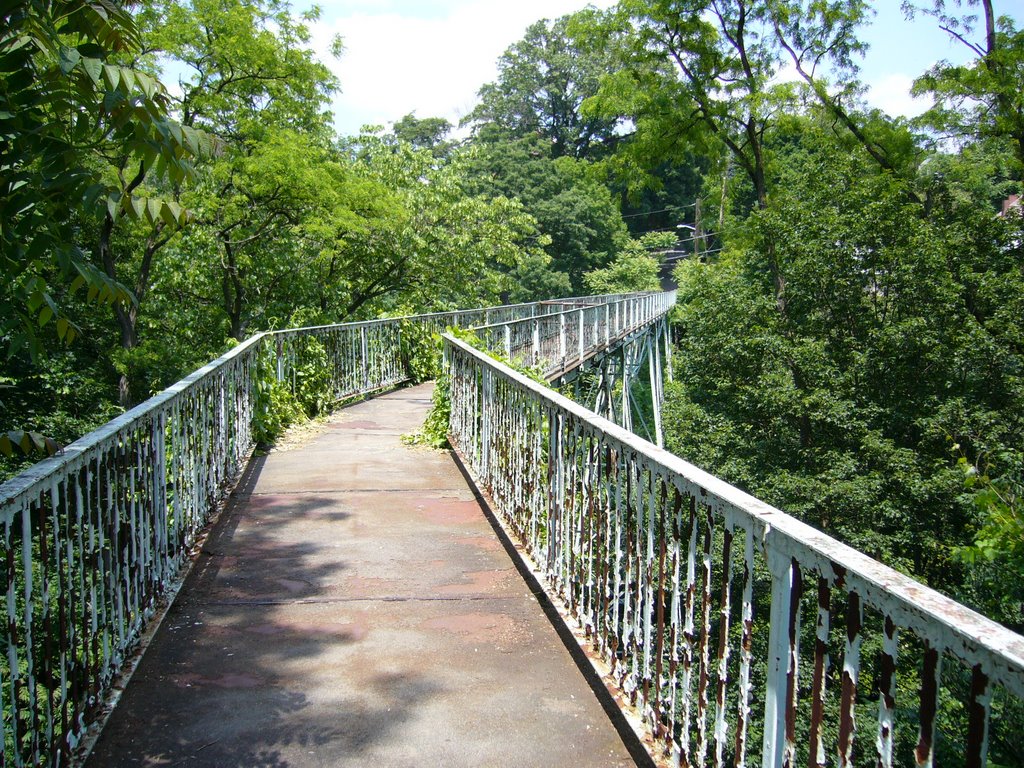
I've been hearing a lot on the new book "The Bridges of Pittsburgh." Apparently we do have more bridges than any other city in the world. The author, Bob Regan, previously published a book on the stairways of Pittsburgh. Yes, these are great assets and likely fine books. But the state of our bridges and stairways are not such that we can take full advantage of those assets.
While wondering around Brighton Heights one day, I discovered a walking bridge off Termon Avenue. Today I had a few minutes to kill so I walked the bridge. I had thought it was closed to pedestrian traffic since it was blocked by a baricade, but on closer inspection I noticed you could go around the baricade which was likely placed to keep bicycles or other small vehicles from traveling on the bridge.
Like San Francisco and other great cities, Pittsburgh is connected by an intricate system of pedestrian walkways. In fact, many homes are not accessible by automobile, and as this bridge in Brighton Heights illustrates, many connections are not possible by auto.
My walk today revealed that this pedestrian system is in danger of not surviving but a few more years. Yet, like the Street Cars in San Francisco, Grand Central Terminal, once obsolete these bridges can be a major component in an exciting future.
Saturday, May 27, 2006
I've heard more rumors that a coffee shop could soon ad to the retail scene on East Ohio Street. A coffee shop is a step towards enhancing the viability of the housing in Deutschtown and other residential neighborhoods.
It may seem like "just a coffee shop," but such steps may be as important or more important than larger developments.
Take in point the new entertainment complex planned for the North Shore. Entertainment is not exactly what we need to boost the viability of housing. More than entertainment, urban housing needs grocery stores and drug stores and coffee shops.
Recently Trader Joe’s announced it's moving into East Liberty. It doesn’t immediately benefit North neighborhoods, but the success of these stores could send companies like these looking for other city locations. I expect our best hope is that with continued downtown residential development, we’ll see retailers like Trader Joe’s and Walgreens looking at spaces—many which already exist on the North Shore and maybe even North Side.
Still, we (North Side) really need to resell parts (Deutschtown, Mexican War Streets and North Shore) of the North Side as "DOWNTOWN" living. These neighborhoods are the remainder of downtown Allegheny, which ajoined downtown Pittsburgh until it was annexed. They should, more than a century later, be officially united with the rest of downtown Pittsburgh.
Monday, May 15, 2006
Fortune magazine and CNN recently published a list of seven real estate dead zones, five danger zones and several safe zones. The seven dead zones are some of the biggest markets that have seen the most market heat in recent times. They include Boston, Las Vegas, Miami, Washington, DC, Phoenix, Sacramento and San Diego.
The danger zones include Chicago, Los Angeles, New York, San Francisco and Seattle.
What’s safe? Cleveland, Columbus, Dallas, Houston, Kansas City, Omaha and Pittsburgh.
What makes a market safe, dangerous or dead? Compare Pittsburgh with San Francisco and Boston. In Pittsburgh the average home price is listed at $155.3K and the fair market value is listed as $182.1K, fifteen percent undervalued. CNN gives San Francisco and Boston an overpriced rating with the average price exceeding the fair market value as much as 53 percent.
Fortune says right now the ratio of home values to incomes in the bubble zones is about 40 percent above its historical average.
The analysis says homeowners who can stay put have little to worry about. Those who bought high and have to move may have difficulty. In a separate article, the magazine tells real estate investors who have hoped to hold and flip to get out.
Of course things are different in the safe cities like Dallas, Cleveland, Omaha and Pittsburgh. The bubble never took prices into the stratosphere and homes are affordable to a far larger percentage of the population.
Will that send investors and homeowners to Pittsburgh? As far as investors are concerned, that might depend how well alternate investments like cds and stocks are performing. Where home values increase at five percent or so, a cd paying five percent is easier money. Rentals can have much higher return, but not without effort.
As for potential homeowners, I suspect the outflow from major cities may subside as prices fall, but it’s unlikely prices can fall enough to make high-priced cities much more affordable. Cities with affordable housing should continue to have some lure. Those who already own homes in high-priced markets can’t easily move without incurring losses, instead they are dependent on looking for salary increases to make up the difference.
Tuesday, May 09, 2006
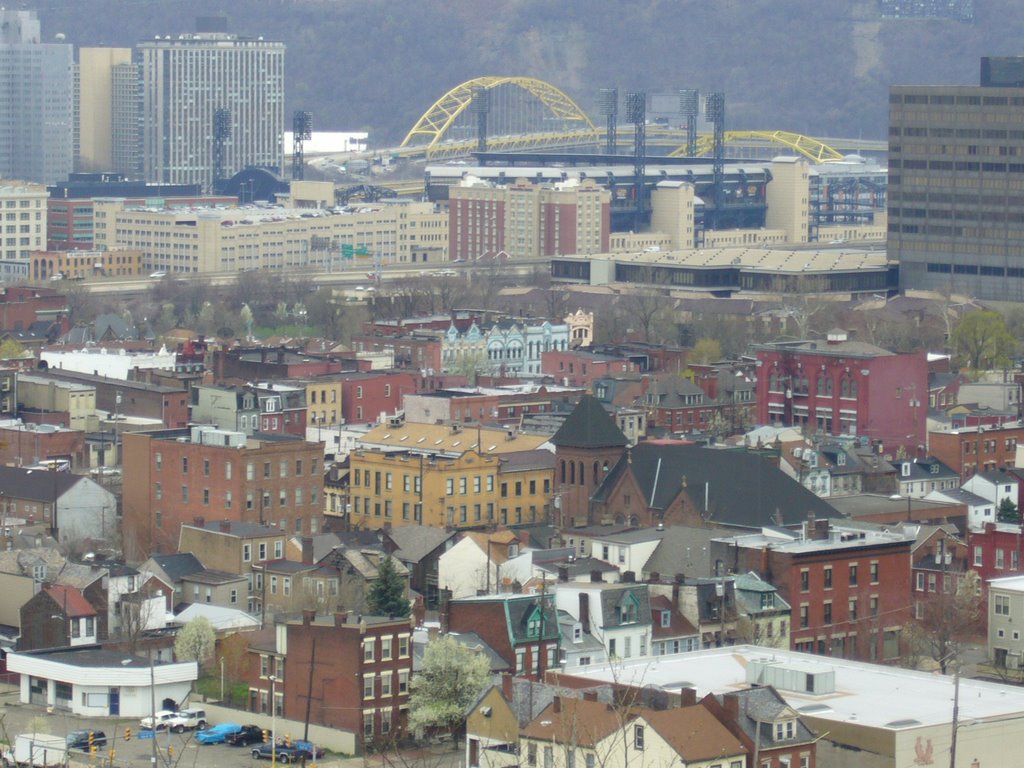
You've probably heard by now that Pittsburgh was ranked among the top ten "smart" cities--meaning you can afford a pretty good life here without breaking the bank. I guess that's kind of like buying a loaded Buick instead of a Lexxus. Anyway, I was never one for fancy cars.
If you've ever thought life was too expensive where you live, you might have looked to other cities. Many people have considered quitting their jobs, retiring early, selling their condos and just high-tailing it out of San Francisco, LA or New York.
Pittsburgh, Nashville, Minneapolis and the other seven cities would seem to be smart choices; the folks who move here undoubtedly will find a good quality of life at an affordable price.
These affordable cities aren't the only place people are moving to, however. While on one hand condos are filling America's downtowns, the far exurbs are filling with new housing. Unlike the affordable cities, moving to the exurbs is not a smart choice.
Despite the lure of affordablility, most cities are losing people. In fact, the census says nearly every large metropolitan area had more people move out than move in from 2000 to 2004.
Likewise the New York Times recently anylized IRS data and found that with the single exception of Las Vegas, no city proper makes the list of substantial population gainers; "American taxpayers by and large are outward bound. But this isn't uniformly a migration to exurbs, or to traditional Sunbelt or Western destinations like Florida or Arizona.
The trails often lead north, to the lakes of Minnesota and Wisconsin; to the foothills of northern Georgia; to the forests of northern California; to the fields of northern Michigan. Cass County, Minn., 120 miles from Minneapolis, is on the list, as is Shasta County, Calif., 180 miles from San Francisco," the paper revealed.
The cost of gas not withstanding, none of these places folks are moving to made the list of "smart" choices. Live in an expensive city? Thinking about relocating? Pick up a copy of Kiplinger's Personal Finance and choose a smart city before you go.
Tuesday, May 02, 2006
Millcraft industries suggested recently that bus traffic be routed off of Fifth Avenue downtown. According to a Post-Gazette article, the company believes smog from the buses, loitering in front of buildings, and traffic congestion could hinder its plans for residential and retail development on Fifth.
As someone who wakes to the sound of "12A-Downtown" I can relate to the concerns. Diesel buses in Pittsburgh are also far less tolerable than the electric buses and streetcars in San Francisco. Replacing buses with more living-friendly forms of public transportation would be a great goal. However, the desire to eliminate the "clutter" of the street is as old and damaging as ever.
The desire to bring residents to enjoy urban downtown is welcomed, but the desire to make downtown into a suburb is misguided and harmful. Also mentioned in the article is a desire to eliminate "loitering." I guess that means waiting for buses.
Let's refer here to Jane Jacobs. Just when I thought she'd won, we need her more than ever.
"Under the seeming disorder of the old city, wherever the old city is working successfully, is a marvelous order for maintaining the freedom of the city. It is a complex order. Its essence is the intricacy of sidewalk use, bringing with it a constant succession of eyes. This order is all composed of movement and change, and although it is life, not art, we may fancifully call it the art form of the city and liken it to a dance -- not to a simple-minded precision dance with everyone kicking up at the same time, twirling in unison and bowing off en masse, but to an intricate ballet in which the individual dancers and ensembles all have distinctive parts which miraculously reinforce each other and compose an orderly whole."
Saturday, April 22, 2006
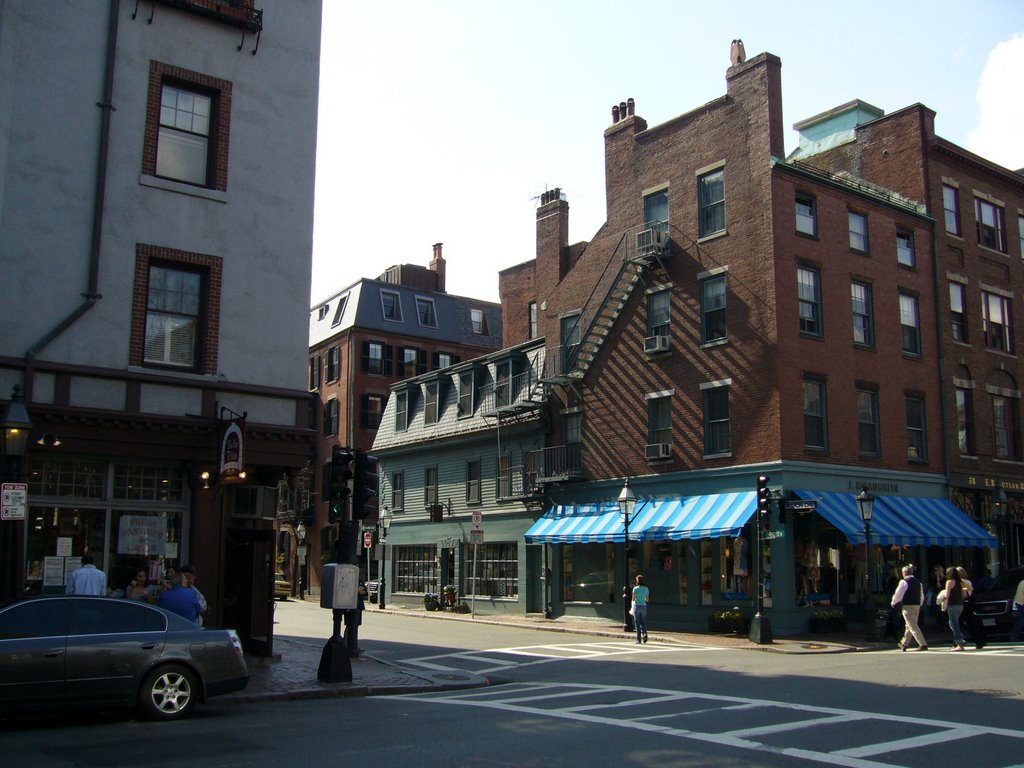
A recent headline caught more than a few urban advocates off guard. “American’s Fleeing Big Cities.” According to a new census report nearly every large metropolitan area had more people move out than move in from 2000 to 2004.
Working in real estate leads to a natural interest in trends such as these. It’s hard to tell whether Pittsburgh can be included in this category. The first question is whether Pittsburgh is a big city to be fleeing from or a small town to be fleeing to.
Folks have been leaving Pittsburgh (along with Cleveland, Buffalo, Youngstown) for decades now, and while there is incidental evidence that people are now coming in, census data hasn’t yet showed that (while the losses continue to lessen).
The reason given for fleeing the biggest cities, high cost, certainly aren’t present here. That at least leaves the door open for Pittsburgh to be a place to flee to, if she plays her cards right.
The conundrum is that traditionally it has been places that people are fleeing to that experience the high real estate prices. Today it’s the places being emptied. About 60,000 people left San Francisco between 2000 and 2004, Chicago experienced similar numbers. New York City lost some 210,000. Los Angeles had losses topping 110,000.
Richard Florida, (fomer Pittsburgher and) a professor of public policy at George Mason University told USA Today that smaller, wealthier households are replacing larger families in many big metropolitan areas.
“That drives up housing prices even as the population shrinks, chasing away even more members of the middle class.”
That may be, but the question of how long can prices continue to rise when people are leaving needs to be asked. In most cities, smaller, wealthier households moving in marks a paradigm shift and poses new questions for economists. It also poses questions for the direction of the markets in places where former urbanites are moving to. It isn’t the working poor as much as the young and upwardly mobile who are choosing to relocate outside major metropolitan areas.
On the subject of trends, there are two other issues that are sure to come into play. The first is the high cost of fuel. What is that expected to do to housing markets? My inclination is it will favor cities or transit communities. Yet the fuel costs probably aren’t going to increase enough to warrant the price of urban Boston. The combination may just make life harder without having a net impact favoring suburban or urban geography.
The second is global warming. We know it’s happening whether or not it’s caused by humans. This may not in itself favor urban or suburban locations, but is sure to favor regions. Where? Thoughts?
Wednesday, April 12, 2006
DiBruno, DeLallo, whatever. It's a great choice for a market in downtown Pittsburgh. DeLallo Bros. has been chosen as the market that will be located in the former Lazarus department store in downtown Pittsburgh. Initially the possible outlets mentioned were Giant Eagle and Whole Foods, but in the end it was the local chain that won out. DeLallo is based in Jeanette. I had previously visited one of their stores near Greensburg. It reminded me of DiBruno Bros., a store that started in the Italian Market District in Philadelphia. I previously suggested something similar would be a good match for downtown Pittsburgh (DiBruno has a location on Chestnut Street in Philly--an area with many hotels and retail stores). From my small sample, DeLallo has great products and I feel the store is the perfect match for downtown Pittsburgh. It's sure to please downtown residents, office workers and vistors.
Visit DiBruno
Visit DeLallo
Saturday, April 08, 2006
With a lot of out-of-towners looking for homes in Pittsburgh, I get a lot of questions asking just what a particular neighborhood is like. You can only tell so much from a map and a photo of a house.
There's really no substitute for going there, however, but a picture is still worth more than a map and photo. I've begun a site at pbase that will allow me to upload photos of our neighborhoods on an ongoing basis.
In anticipation of my persistence, the site contains a small fraction of what will eventually be there, but it's enough to help begin to provide some snapshots of Pittsburgh's great neighborhoods Link
Wednesday, April 05, 2006
PMI Mortgage recently listed Pittsburgh as one of the nation's least risky housing markets along with San Antonio, Cincinnati, Indianapolis and Memphis. This echoes earlier reports inluding Smart Money magazine which called out city "undervalued."
These are the exceptions. PMI says forty-eight of the nation's 50 largest metropolitan statistical areas (MSAs) face a greater risk of declining home prices this quarter, adding the continued strength of the national and local economies suggests that in the absence of an economic shock, the once red-hot housing market will cool gradually. Appreciation has slowed in nearly half of the MSAs as compared to last quarter. Affordability remains a problem with eight MSAs registering affordability levels considered low by historical standards, due to appreciation and higher interest rates.
U.S. Market Risk Index scores increased for all of the top 50 MSAs except Chicago, IL, whose score decreased one point (New Orleans was not scored this quarter due to the catastrophic impact of Hurricane Katrina). Fourteen of the top 50 MSAs now have risk scores above 500, meaning they face a 50 percent or greater risk of home price declines in the next two years, up from 11 MSAs last quarter. The average score has increased from 261 last quarter to 287. The biggest change was in Minneapolis, MN, which gained 90 points, taking it to a score of 350 and up two spots in the ranking to No. 19.
Other U.S. Market Risk Index trends include:
-- In addition to Minneapolis, MN, MSAs that saw significant increases in risk were Virginia Beach, VA (+65 points to 274), Baltimore, MD (+62 to 279), Newark, NJ, (+61 to 427), New York, NY (+58 to 506), and Washington, D.C., (+56 to 401).
-- Riverside and Oakland, CA traded places, making Riverside No. 5 and Oakland No. 7. San Francisco and San Jose, CA also traded places, making San Francisco No. 10 and San Jose No. 11. Other than that, the top 15 are the same as last quarter with risk still clearly focused on the coasts.
-- There are now eight areas with Affordability Index scores below the vulnerability threshold of 70: San Diego, Santa Ana, Riverside, Sacramento, Oakland, and Los Angeles, CA, and Fort Lauderdale and Miami, FL. Long Island (Nassau-Suffolk), NY, San Jose, CA, and Tampa, FL are also considered potentially vulnerable with scores between 70 and 75.
-- While slowing, appreciation remains high by historical standards. Phoenix, AZ, Orlando, Fort Lauderdale, Miami, and Tampa, FL, Washington, D.C., Virginia Beach, VA, and Los Angeles, CA saw year-over-year appreciation of more than 20 percent.
The PMI report coincided with numbers from the National Association of Realtors showing second-home buyers now made up 40 percent of the market. The bulk (27.7 percent) of these are purchased for investment purposes.
The San Francisco Chronicle noted however that while risk for that city's homebuyers may be increasing, in the past 20 years the return for any five-year period ranged from a gain of nearly 50 percent to a loss of about 10 percent, with a median gain of 33 percent. Those who owned their homes for 15 years or more almost never incurred losses.
Subscribe to:
Posts (Atom)